
Ice Dams and Snow Load: Winter Roof Prep in Klamath Falls
Winter Doesn't Break Roofs. Water Does.
Most people picture a roof failing under a foot of snow. That's not usually what happens around here. What actually gets homeowners in the Klamath Basin is meltwater — snow that melts on the warm upper part of a roof, runs down to the freezing edge, and turns back into ice. Do that a few dozen times over a winter and you get an ice dam: a ridge of ice at the eave holding a pond of water behind it.
That water has nowhere to go but sideways and up, under the shingles. By the time you see a stain on a bedroom ceiling in February, the water has usually been sitting in the decking for weeks. We've been repairing that exact damage in this valley for nearly 38 years, and the pattern almost never changes. The fix is cheap in September and expensive in January.
Get a Free Estimate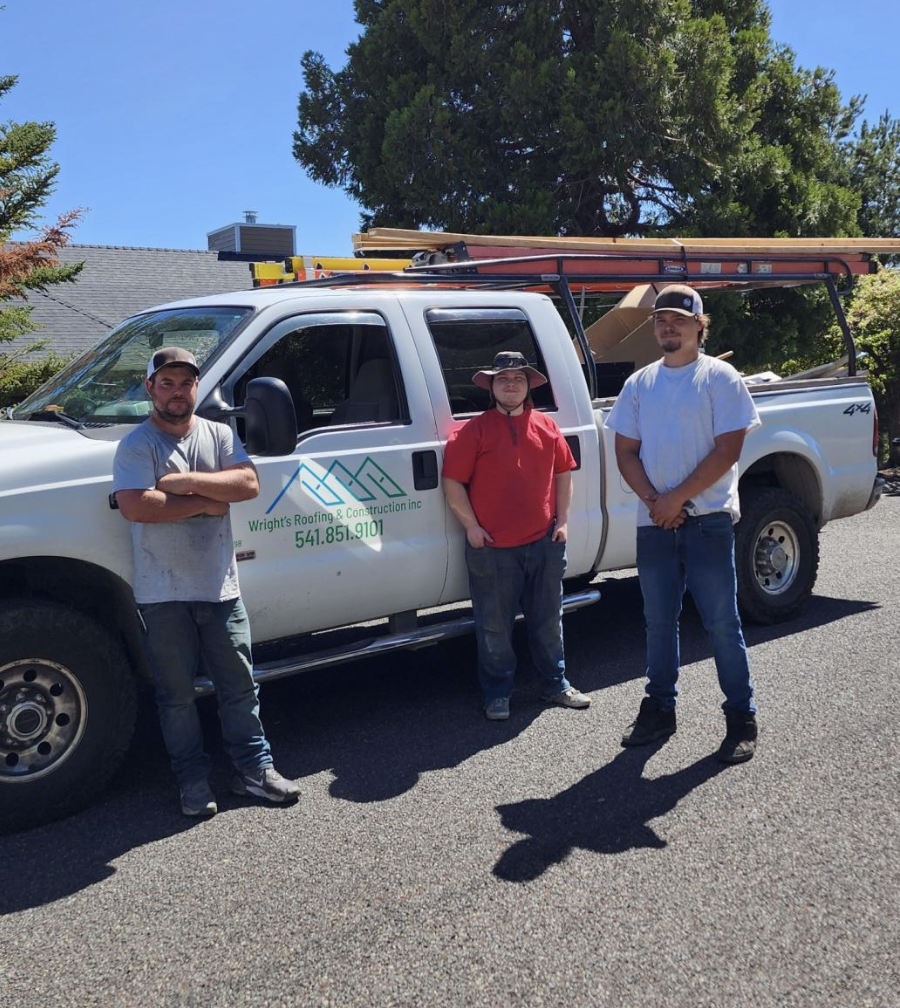
Five Things Worth Knowing Before the Snow Flies
This isn't a sales pitch dressed up as advice. It's what nearly four decades of tearing off waterlogged decking in Klamath County has taught us about how winter roof damage actually happens — and what you can do about it while the weather still cooperates.
The Problem Starts in Your Attic
An ice dam is a heating problem before it's a roofing problem. Warm air leaks out of the living space into the attic, collects under the roof deck, and melts the underside of the snowpack. That meltwater runs down toward the eave — which hangs out past the heated part of the house and stays at outside temperature. It refreezes there. The next melt cycle adds to it, and within a week or two you have a solid ridge of ice sitting on the coldest three feet of your roof.
Shingles are designed to shed water running downhill, not to hold back a standing pond. That's why the proper defense is built into the roof itself: a self-adhering ice-and-water membrane along the eaves and valleys, good attic ventilation to keep the deck cold, and sealed flashing at every penetration. If your roof is more than 20 years old, there's a fair chance it has none of that. Our roof repair team can tell you in one visit what you're actually working with.
"I was glad I chose Wright's Roofing for my new roof job. Robert was very knowledgeable having many years in the industry. Their crew was polite and friendly, and communicated with us often about progress."
See our profile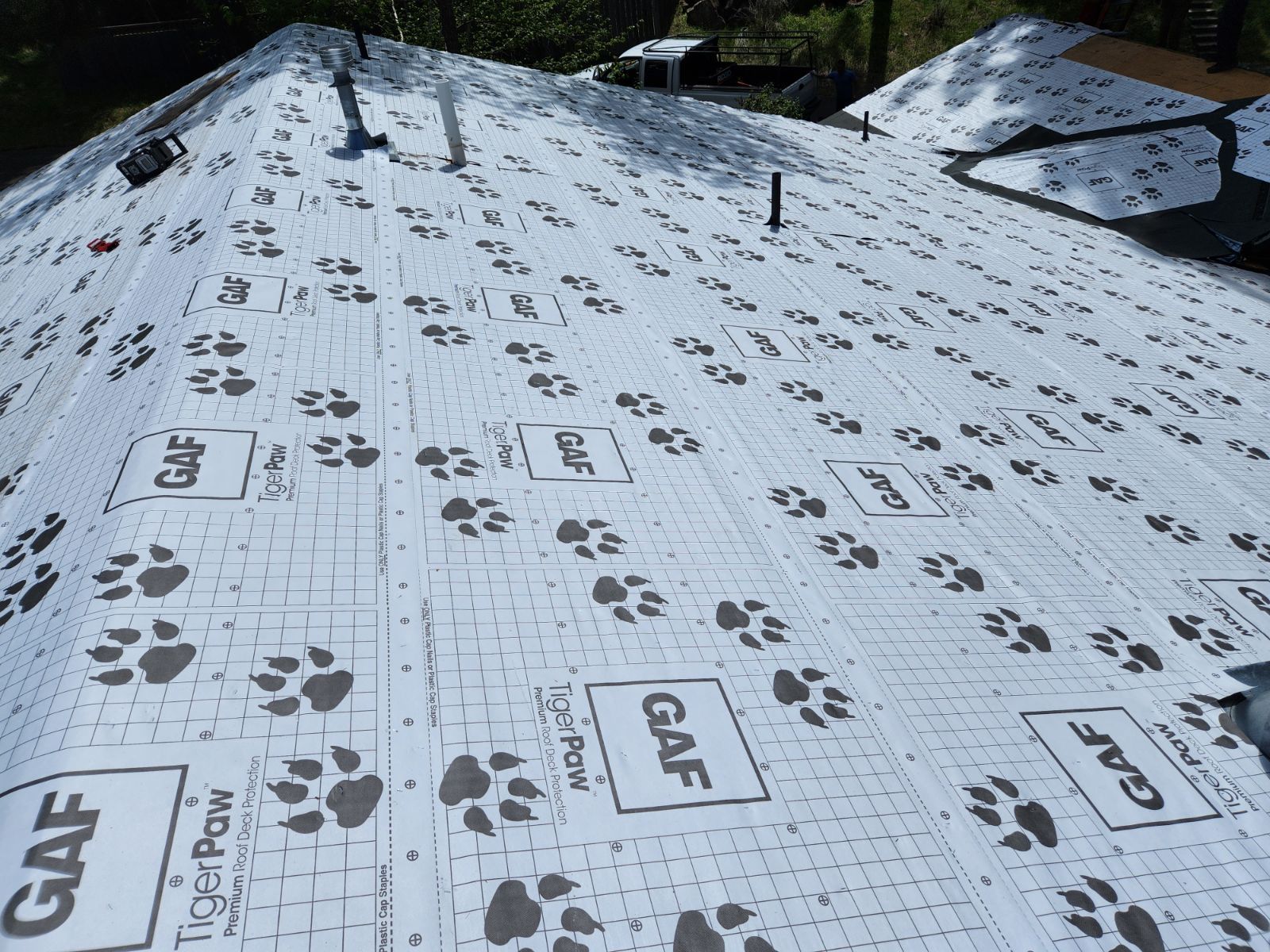
Weight Is Rarely the Real Threat
Most homes in the Klamath Basin were framed to carry the snow we get. Structural collapse from snow load is rare, and when it does happen it's usually a carport, an old shed, or a low-slope addition that was never engineered for it. What actually wears a roof out here is repetition — the daily cycle of thaw at noon and hard freeze at night. Water works into every hairline gap, expands about nine percent when it freezes, and levers the gap a little wider. Do that a hundred and fifty times a winter and small defects become open seams.
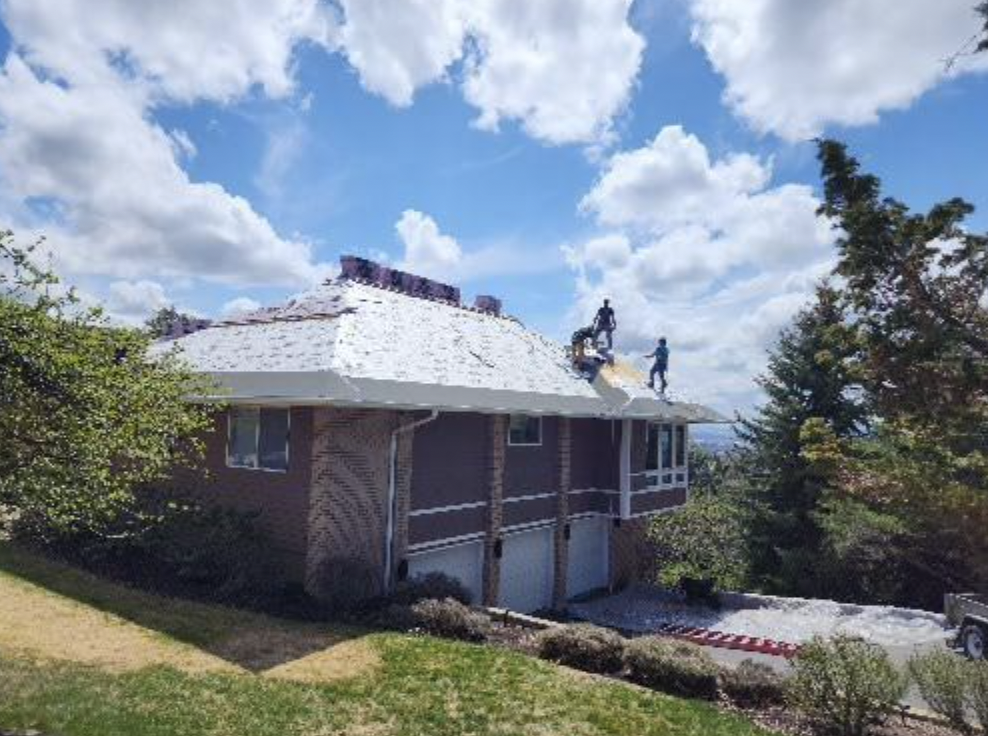
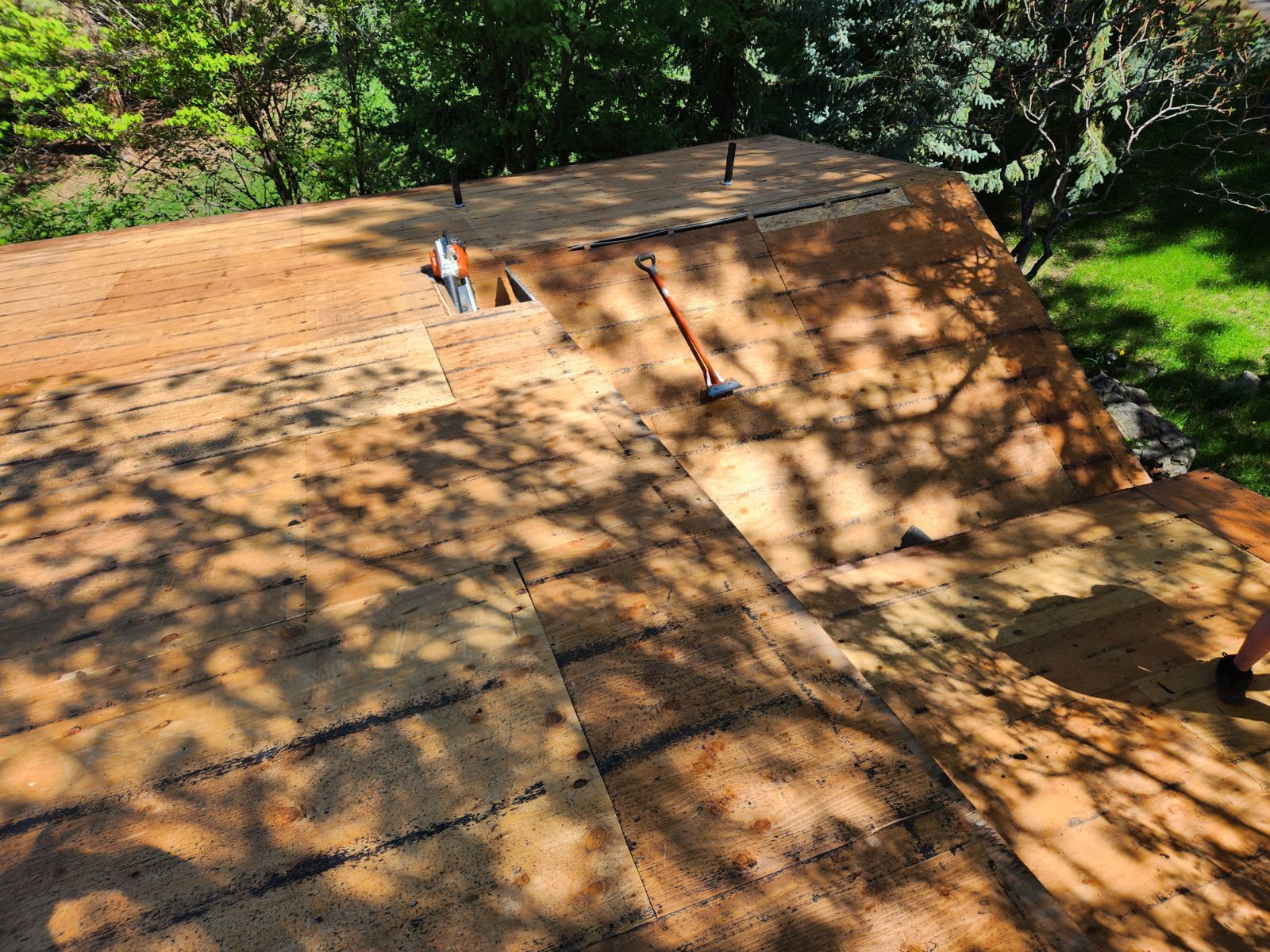
That's why we don't patch around a failing deck. If the plywood under the shingles has gone soft from years of trapped moisture, no amount of new shingle will hold. Drag the slider on the right to see one Klamath Falls home mid-tear-off and then finished. If yours is at that stage, start with our roof replacement page.
"Highly recommend Wrights roofing. We had our roof fully replaced and a rafter repaired. From start to finish the customer service and work is outstanding."
See our profile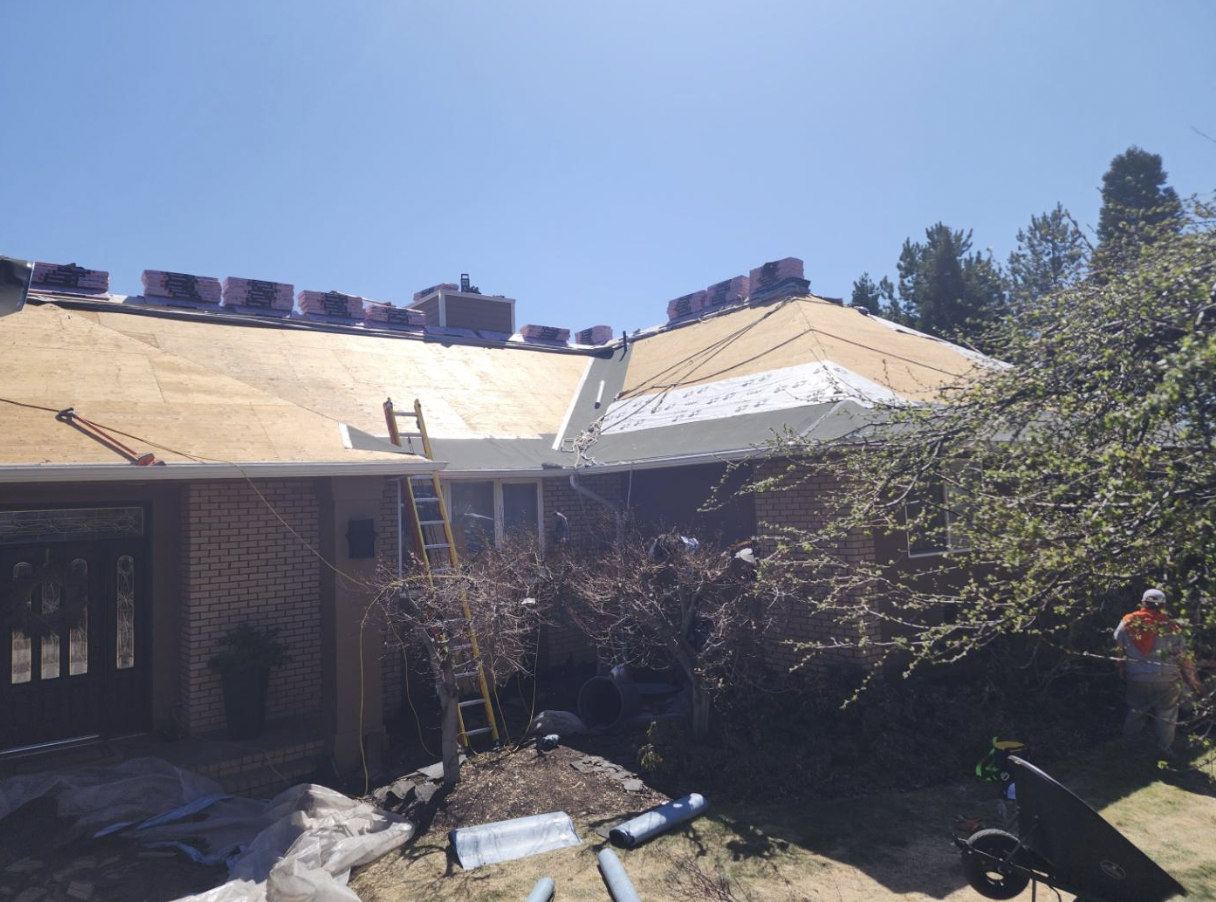
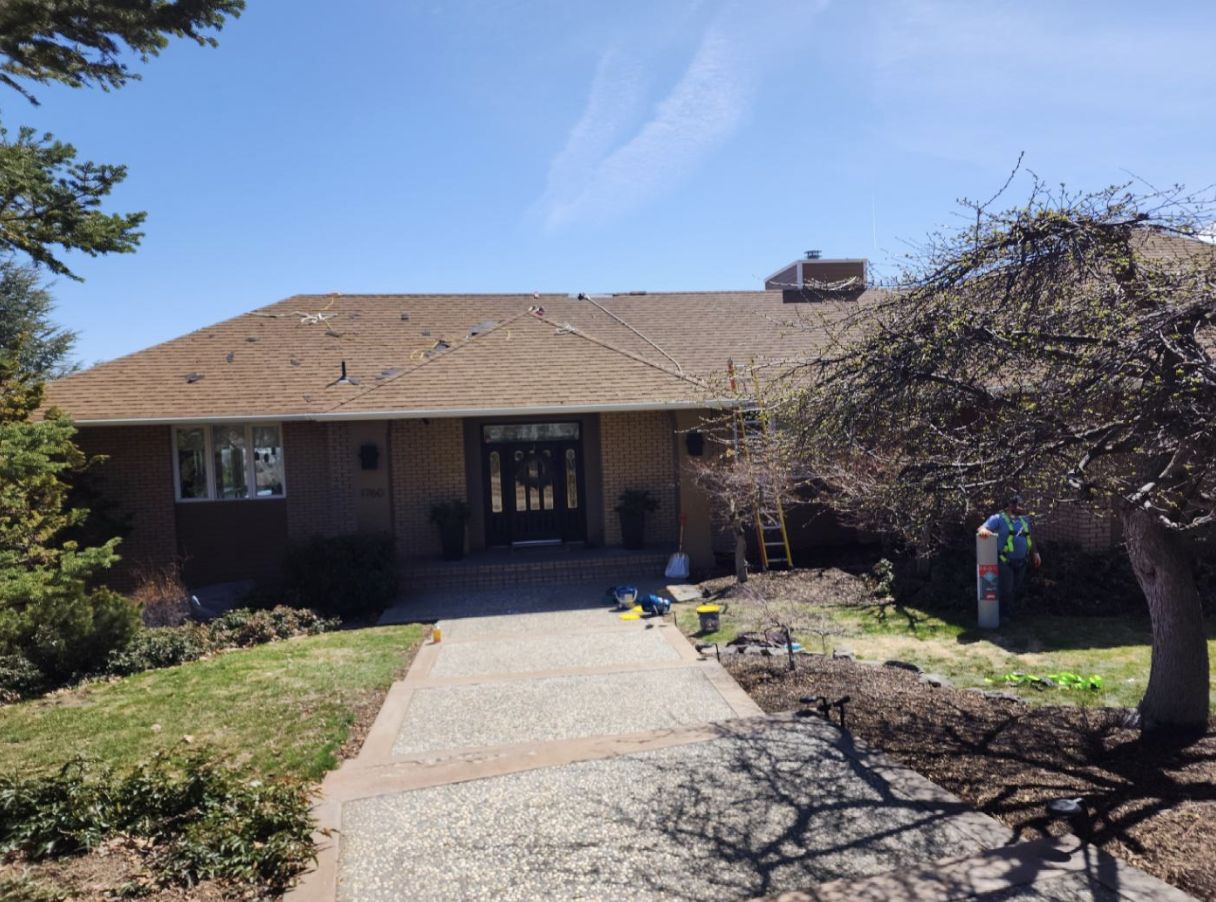
A single-story Klamath Falls home taken down to bare decking and re-roofed. Tear-off is the only way to know what the old roof was hiding.
A Full Gutter Is a Block of Ice
Pine needles and leaves pack into a gutter over the fall, hold water, and then freeze solid. Now the ice dam has a foundation to build on, and every melt cycle adds another layer. Frozen gutters also tear loose — the weight is far more than the hangers were sized for, and they take fascia board with them on the way down. We pull a lot of gutters off houses in January that were fine in October and simply never got cleaned.
Clear them, check that the downspouts actually discharge away from the foundation, and look at where the water lands. If it's dumping onto a walkway, you've built a skating rink for the winter.
"This is a family owned business with good teamwork skills in getting things done!! Very affordable and always a follow up to ensure customer satisfaction!"
See our profile
Local Roofs, Local Weather
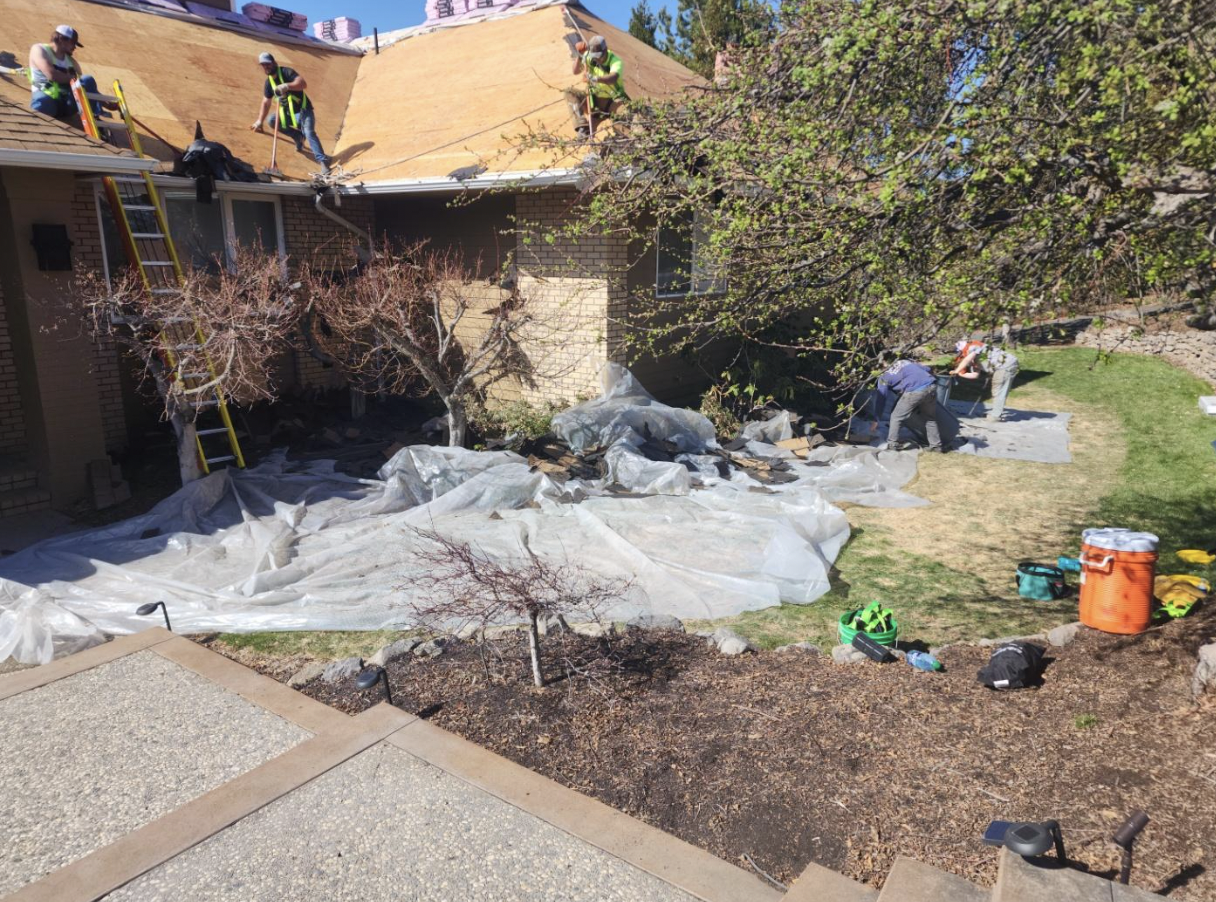
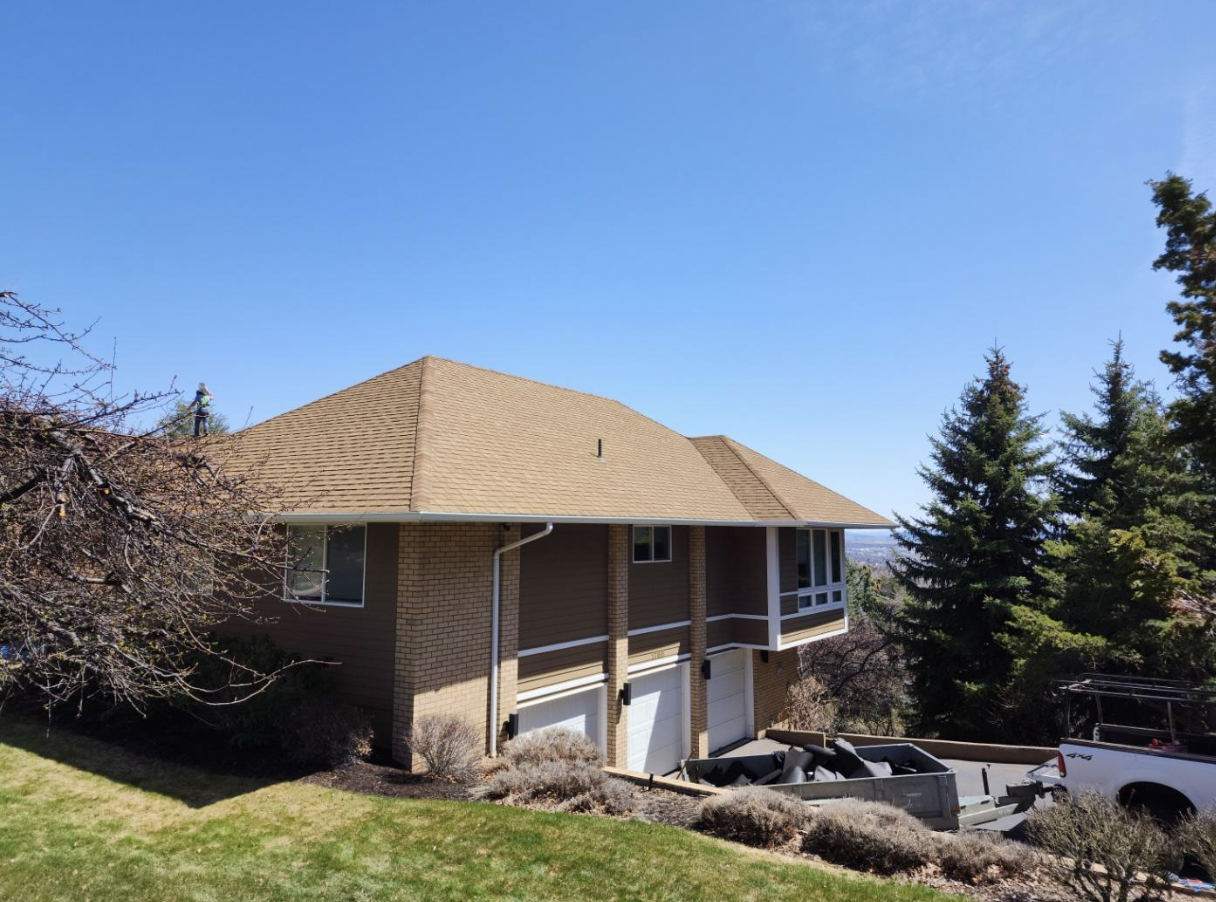
Every house in these photos is within a short drive of our shop on Crest Street. That matters more than it sounds. A crew that works the Klamath Basin year after year knows which subdivisions have north-facing slopes that never see sun from November to March, which neighborhoods have the shallow-pitch ranch roofs that hold snow, and which ones sit under pines that fill a gutter in a week. Click any photo to open it full size.
"Wrights roofing instaled a skylight and Pergola cover for our house. Everyone was professional and the completed work was excellent!"
See our profile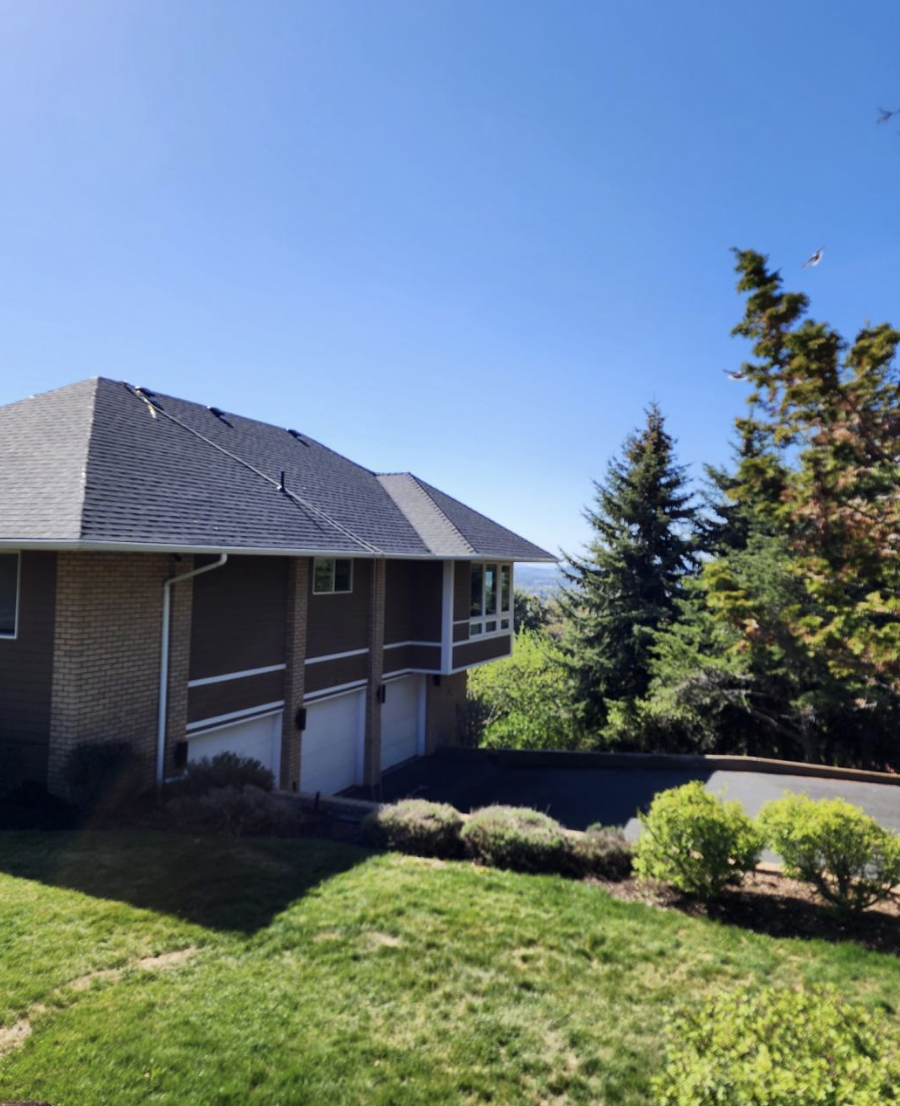
Don't Wait for the Ceiling Stain
Call us in the fall if you can see granules collecting in the gutter, if any shingle is cupped or lifted at a corner, if the pipe boots look cracked or chalky, or if you had icicles running the length of the eave last winter. Those icicles are not decorative — they're the visible edge of an ice dam. Call us in the winter, any hour, if you find a wet spot on a ceiling, hear dripping in the attic, or see water tracking down an interior wall. That one can't wait for spring.
We're at 3410 Crest St in Klamath Falls and we run 24/7 emergency service across the basin and the Rogue Valley. Estimates are free and we don't charge to come look.
"Great roofing company, very nice people, super respectful! Definitely recommend over other roofers these guys are just super nice"
See our profileYour Pre-Winter Roof Checklist
Six things worth doing on a dry weekend. Most cost nothing but an afternoon, and any one of them can save you a winter emergency.
Clear the Gutters
Pull out the needles and leaves, then run a hose to confirm water actually reaches the downspout and discharges clear of the foundation.
Go Up in the Attic
Look for daylight at the eaves, damp insulation, or frost on the underside of the deck. Any of the three means warm air is escaping where it shouldn't.
Check Every Penetration
Pipe boots, vents, skylights and chimney flashing are where leaks start. Cracked rubber and lifted metal are both easy fixes in September.
Look for Granules
A pile of grit at the bottom of the downspout means your shingles are shedding their protective surface and the clock is running.
Trim Back Branches
Limbs overhanging the roof drop debris all fall and break under ice all winter. Cut them back well clear of the roofline.
Book the Work Early
Repair schedules fill up as soon as the first storm hits. Getting on the calendar in fall means the work happens in decent weather.
This was a dream project! Same day bid. Project started two days later. Finished four days later. All paperwork was efficient and clear. All questions were answered. Rob and his team were hard-working and always pleasant. Thank you to everyone.
Ice Dams and Winter Roofing, Answered
Usually, yes. A few short icicles after a warm afternoon are normal. A row of thick icicles that keeps coming back all winter means snow is melting on the upper roof and refreezing at the cold edge — which is the definition of an ice dam. The ice you can see hanging is the small part. The part sitting on the shingles behind it is what does the damage.
Heat cable is a management tool, not a cure. Run along the eave and through the gutter, it keeps a channel open so meltwater has somewhere to drain instead of pooling. That helps a lot on a problem roof. But it doesn't address the attic heat loss causing the melt in the first place, and it adds to your power bill every month it runs. We'll install it when it's the right call — we just won't tell you it fixes the underlying issue.
Please don't. Chipping at ice with a hammer or a shovel wrecks shingles, and an icy roof with a ladder against it is how people end up in the emergency room. A roof rake used from the ground to pull snow off the bottom few feet is reasonably safe and genuinely helpful. Anything beyond that, call somebody who does it for a living.
It stopped because the ice melted, not because anything healed. That water went into the decking and insulation and it's still there. Left alone through another season, you're looking at rotted sheathing, compromised insulation and often mold in the attic. A one-time leak is a warning, and it's cheap to chase down in dry weather.
No. Emergency repairs, temporary dry-in and leak tracing all happen in winter — that's a large share of what we do from December through March. Full tear-offs and replacements are different, since asphalt shingles need reasonable temperatures to seal properly. If your roof needs replacing, we'll get you through the season safely and schedule the real work for spring.
We run 24/7 emergency service, so the phone gets answered. How quickly we're standing on your roof depends on the weather, how many other calls came in with the same storm, and whether it's safe to be up there in the dark. We'll be straight with you about the timeline when you call rather than promising something we can't hold to.
Where to Go From Here
Roof Repair
Leak tracing, flashing, pipe boots and storm damage — with free estimates and 24/7 emergency response across the basin.
Learn MoreRoof Replacement
Full tear-off and re-roof with proper underlayment, ventilation and eave protection built in from the start.
Learn MoreMetal Roofing
Standing seam and panel systems that shed snow well and hold up to decades of Southern Oregon freeze-thaw.
Learn MoreAreas We Serve
Get It Looked At While It's Still Dry
Estimates are free and there's no charge to come out and take a look. If your roof is in good shape, we'll tell you that and you can stop worrying about it until spring.
Tell Us What You See
Call or send a message describing what's going on — icicles, a stain, missing shingles, or just a roof you haven't checked in years.
Get a Free Estimate
We come out, get on the roof, look in the attic where it matters, and give you a clear written number with no pressure attached.
We Get It Done
Our crew shows up when we say, works clean, picks up every nail at the end of each day, and follows up after the job is finished.