
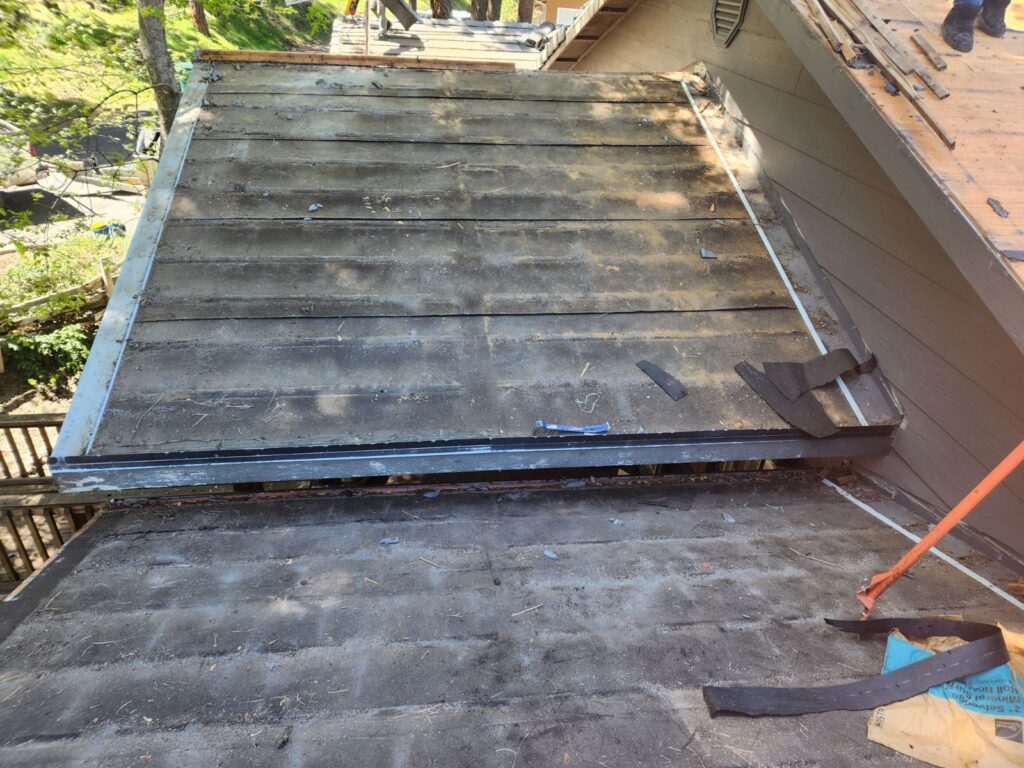
Coat, repair, or replace? What to do with an aging flat roof in Klamath Falls
On this page · 9 sections
When a building owner calls us about a flat roof, the first question is almost always the same: can you just coat it, or does the whole thing have to come off? It's a fair question, because the answer swings the bill a long way. Flat and low-slope roofs around Klamath Falls get a hard workout — snow that sits instead of sliding off, meltwater that refreezes in the low spots, and summer sun beating straight down on the membrane. Some of those roofs have years left and need a repair and a fresh coating. Others are holding water inside the insulation, and no coating in the world will fix that.
We've been roofing for 38 years, and we're trained in hot-air welding PVC and TPO single-ply membranes, so we work on both sides of this decision. It comes down to four questions: where the water is getting in, whether what's underneath is still dry, whether water drains off the roof or sits on it, and how long you need the building to stay dry. Here's how we walk through them on a flat roof.
The short answer
Bottom Line Up Front
If the leak traces to one spot, the deck is firm, and the insulation is dry, repair it and coat it. If the roof is wet underneath, leaking in several places, or holding water for days after a storm, a coating only hides the problem — replace the membrane.
A coating is a good tool on the right roof. It renews the surface and buys time on a membrane that is weathered but sound. What it can't do is dry out soaked insulation, firm up a rotted deck, or change the way water drains. The trick is finding out which roof you have before another Klamath Falls winter answers the question for you.
that started on a family crew in 1985
(Oregon requires 1)
when a flat roof lets go
The rest of this post is the four questions behind that answer, with a decision matrix at the end you can check against your own building.
Question 1: Is the water coming in at one spot or several?
Start inside, not on the roof. A single stain under a rooftop unit, a vent, or a drain usually points to one failure: a cracked flashing, a pipe boot that has dried out, or a seam that opened where the membrane meets a curb. That's what repairs are for. We find the failure and fix it, and if the rest of the membrane is sound, a coating can renew the surface around it.
When stains show up in different rooms each winter, the story changes. On a flat roof, water can travel a long way under the membrane before it finds a way down, so several leaks spread across a building usually mean the membrane is failing in more places than you can see. Patching them one at a time turns into a standing appointment, and that's exactly the kind of roof we don't want to leave you with.
Coat or replace at a glance
This is the comparison we'd sketch out on the walk-through. Each row is a real decision factor; the highlighted column is the smarter call when that factor is the one driving your decision.
| Factor | Lean Coat or Repair | Lean Replace |
|---|---|---|
| Leaks so far | One spot, one cause | Several spots, every winter |
| Deck and insulation | Dry and firm underfoot | Wet, soft, or spongy |
| Drainage | Dries out after a storm | Water stands for days |
| Membrane surface | Weathered but intact | Cracked, split, or blistered |
| Seams | Mostly tight, one or two open | Opening along long runs |
| Your plans | Selling or short-term use | Holding the building long-term |
| Storm damage | Minor and contained | Widespread, with a claim that covers it |
These are the factors we weigh on flat and low-slope roofs around Klamath Falls. Your building is likely more than one row — the right call is whichever column wins the most of your rows.
The easiest inspection you can do is walk the inside of the building after a storm or a thaw. Mark every stain, drip, and sagging ceiling tile on a floor plan or a phone photo. One mark in one place points to a repair. Marks scattered across the building point to the membrane. Bring that list to the walk-through and we can match it to what we find on top.
Question 2: Are the deck and insulation underneath still dry?
This is the question that decides most flat roofs, and it's the one you can't answer from the ground. Many flat roofs have insulation board between the membrane and the deck. Once water gets into it, it stays there. Wet insulation stops insulating, it adds weight, and over time it rots the deck it sits on.
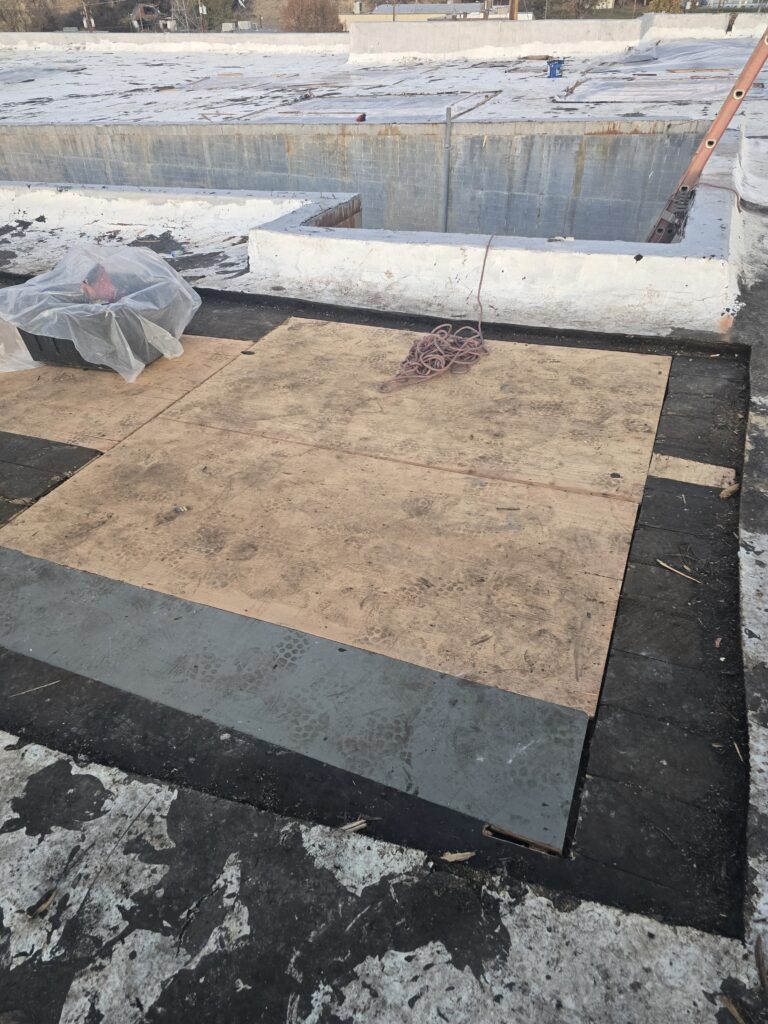
If you have safe access to the roof, pay attention to how it feels underfoot. Soft or spongy areas, blisters that squish, and fasteners backing up through the membrane all point to trouble underneath. On the walk-through we look at those areas closely, and when the deck or insulation is wet, we tell you plainly that a coating isn't the right answer on that section.
Question 3: Does water drain off, or does it sit there?
Flat roofs aren't truly flat. They're built with just enough slope to move water to drains, scuppers, or gutters. When a deck sags or a drain gets buried, water collects in the low spots and stays. Around Klamath Falls, that standing water freezes and thaws through the winter, working at every seam and patch it touches — the same cycle we cover in our post on ice dams and snow load.
A coating can't add slope. If water stands on a section for days after every storm, the real fix is underneath: replacing the soft deck or reworking how the water leaves the roof. That work happens during a replacement, not a recoat.
Signs a coating or repair will do
The membrane has life left and the problem is contained. Fix it, renew the surface, and move on.
What we look for
- The leak traces back to one spot, like a flashing, a pipe boot, or a single open seam.
- The roof feels firm underfoot everywhere, with no soft or spongy areas.
- Water drains off the roof, and the surface dries out after a storm.
- The membrane is weathered but not cracked, split, or blistered.
Signs it's time for a new membrane
The roof is failing as a system. A coating would be buying months, not years.
What changes the answer
- Ceiling stains show up in different rooms, and new ones appear every winter.
- Soft spots, squishy blisters, or fasteners pushing up through the membrane.
- Water stands in the same low spots for days after rain or snowmelt.
- Seams are opening along long runs, not just in one corner.
What a flat roof replacement actually involves
When we replace a flat roof, the old roofing comes off down to the deck, so we can see everything a coating would have covered up. Soft or rotted decking gets replaced, then the new system goes on. On low-slope work we install single-ply TPO and PVC membranes, and we're trained in hot-air welding the seams, which fuses the sheets together instead of relying on glue or tape.
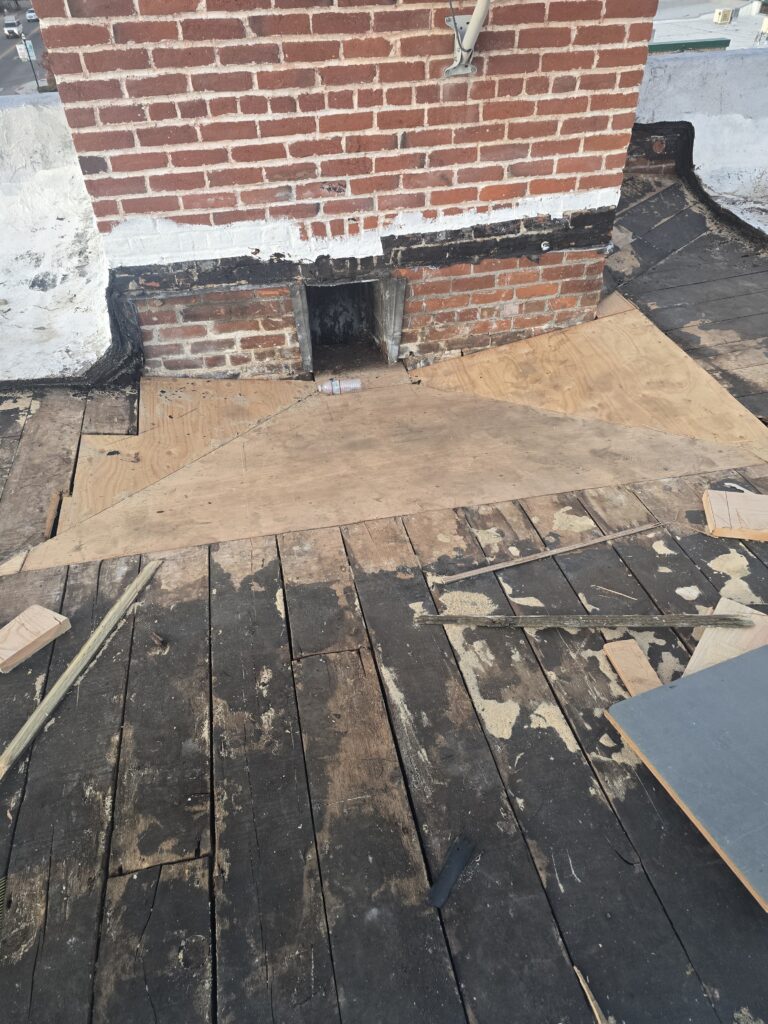
We're a Versico Roofing Authorized Contractor, and Versico warranties the single-ply work we install. If your building needs more than a new membrane, our commercial roofing work covers built-up roofs, TPO, and more complex systems.
Flat roof work draws contractors from far outside the area, some with online profiles that make them look local when they aren't. The trouble shows up later, when a seam opens and nobody is close enough to come back and honor the warranty. Before you sign, ask whether the company is actually locally operated, whether it's licensed, bonded, and insured, and how many years of experience it has. Our guide to choosing a roofer covers the rest.
Question 4: How long do you need the building to stay dry?
If the roof could honestly go either way, the tiebreaker is your plans. Selling the building soon or using it short-term? A solid repair and a coating keep it dry and give the next owner an honest roof to make their own call on. Holding it for the long haul, or running a business underneath it? Replacing once, on your schedule, beats working around a leaking roof every winter. If you're worried about shutting down while the work happens, our post on repairing a commercial roof without disrupting business walks through it.
“You don't want a roof you have to repair every winter. If a coating will do the job, we'll tell you. If it won't, we'll tell you that too.”— Wrights Roofing and Construction
The decision matrix
If you only do one thing with this post, do this table. Read down the left column to your situation, then look at which side has the stronger answer. Most buildings match more than one row — the right pick is whichever column wins the most of your rows.
| If your flat roof… | Coat or Repair | Replace |
|---|---|---|
| Has one leak you can trace | Yes | Overkill |
| Leaks in several places every winter | No | Yes |
| Feels soft or spongy underfoot | Traps the water | Yes |
| Holds standing water after storms | Stopgap only | Yes — fix the drainage |
| Has seams opening along long runs | No | Yes |
| Is on a building you'll sell soon | Yes — keep it dry | Buyer's call |
| Took storm damage | If minor | If the claim covers it |
The bottom line
Plenty of flat roofs that look tired from a ladder don't need replacing yet. They need a repair at the source of the leak and a coating to renew the surface. The ones that do need replacing usually give it away: they leak in more than one place, they're soft or wet underneath, and they hold water after every storm. When those line up, a coating is money spent on top of a problem that's still growing.
If you're not sure which side your roof is on, that's what a free estimate is for. We come out, measure the roof, figure out what's causing the problem, and talk through what you want. Then we send a proposal by email. If you go ahead, we order materials — some are available right away, some take about a week — do the job, and walk around it with you when we're done. We work on flat roofs from Klamath Falls out to Bly, Bonanza, and Lakeview, and if water is coming in right now, our emergency leak repair is available 24/7 at (541) 591-8853.